Fire evacuation may seem simple in a small office, but the process becomes much more challenging in complex facilities. Manufacturing plants, warehouses, hospitals, shopping centers, high-rise buildings, and large commercial properties can have multiple floors, interconnected areas, hazardous materials, heavy equipment, high occupant numbers, and complicated evacuation routes.
Because of these challenges, employees need more than basic instructions about where the emergency exits are. Effective training should prepare them to recognize an emergency, respond quickly, use appropriate escape routes, and understand what to do if normal evacuation procedures are disrupted.
Begin With the Facility’s Actual Risks
Fire evacuation training should always reflect the specific conditions of the facility. Employees working in a warehouse may face very different evacuation challenges from those working in a hospital or manufacturing plant.
Before conducting training, organizations should consider the building layout, fire hazards, emergency exits, stairwells, restricted areas, hazardous materials, machinery, occupancy levels, and locations where evacuation could become difficult. The needs of employees who may require assistance should also be considered.
Understanding these conditions allows training to focus on realistic situations rather than relying solely on generic fire safety instructions.
Make Sure Employees Understand the Alarm
Employees should immediately recognize what the facility’s fire alarm or emergency notification system means and understand what action is expected when it activates.
Training should explain how the alarm is communicated, where emergency instructions come from, and when employees are expected to evacuate. Employees should also know how to respond if they discover a fire before an alarm has been activated.
The goal is to prevent hesitation. During a fire emergency, employees should not wait until smoke or flames become obvious before following established evacuation procedures.
Teach More Than One Evacuation Route
Employees in complex facilities should never become dependent on a single familiar escape route.
A corridor may become blocked, smoke may make an area unsafe, or an exit may become inaccessible. Employees should therefore be familiar with their normal evacuation route as well as suitable alternatives.
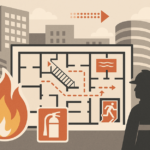
Practical walkthroughs can be particularly effective. Instead of simply showing employees an evacuation map, trainers can take them through relevant routes and explain where emergency exits, stairwells, assembly areas, and alternative routes are located.
This is especially important for employees who work in different parts of a large facility or regularly move between floors and departments.
Clearly Define Emergency Responsibilities
A successful evacuation requires coordination. Employees should understand their individual responsibilities, while designated personnel such as fire wardens, emergency marshals, security teams, and evacuation coordinators need additional role-specific training.
For example, designated personnel may be responsible for directing occupants toward appropriate exits, coordinating evacuation within an assigned area, assisting with accountability, or communicating information to the emergency response team.
However, training should also emphasize that employees and designated responders should not place themselves in unnecessary danger. Their role is to support a safe evacuation, not to take personal risks attempting to fight a developing fire or enter an unsafe area.
Use Drills to Turn Knowledge Into Action
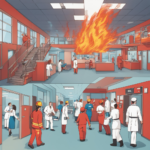
Employees may understand evacuation procedures during a classroom session but respond very differently when an alarm actually sounds. This is why regular evacuation drills are an important part of training.
A drill allows organizations to observe how employees respond, whether evacuation routes are being used correctly, and whether communication between emergency teams is effective. It can also reveal problems that may not be obvious from an evacuation plan alone.
Drills should be carefully controlled and should never expose employees to real fire, smoke, or other dangerous conditions.
Introduce Realistic Scenarios
Once employees understand the basic evacuation procedure, training can become more practical by introducing controlled scenarios.
For example, a drill might simulate a blocked primary exit and require employees to use an alternative route. Another scenario could involve an unfamiliar visitor who needs assistance or a simulated communication problem between different departments.
These exercises help employees understand that an emergency may not happen exactly as shown on an evacuation map. They also give emergency coordinators an opportunity to evaluate how well the facility responds when normal procedures are disrupted.
Do Not Forget the Assembly Point
Evacuation is not complete simply because employees have left the building. Everyone needs to know where to go afterward and how accountability will be handled.
At the assembly point, employees should remain with their designated groups while responsible personnel determine whether everyone has been accounted for. Visitor and contractor information should also be included in the process.
Employees should be instructed not to leave the assembly area or return to the building until they receive appropriate authorization. This helps prevent confusion and ensures that emergency responders have more accurate information about who may still be inside.
Review Every Drill
Every evacuation drill should provide an opportunity to improve.
After the exercise, management and emergency response personnel should review what happened. Were employees able to hear the alarm? Did they know which route to take? Were there bottlenecks? Did employees use alternative exits when necessary? Were visitors and contractors accounted for?
Employee feedback can also be valuable. Someone who regularly works in a particular area may notice an obstruction, confusing signage, or another practical problem that may not be obvious during a formal inspection.
The findings should then be used to improve evacuation procedures, training, signage, communication, and facility arrangements.
Keep Training Up to Date
Fire evacuation training should not be treated as a one-time activity. Employees can forget procedures over time, while facilities and working conditions can change.
Refresher training and periodic drills help maintain familiarity with emergency procedures. Training should also be reviewed whenever there are significant changes to the building, equipment, occupancy, work processes, or emergency response plan.
New employees should receive appropriate evacuation information as part of their onboarding, while employees with specific emergency responsibilities may require additional training.
Creating a Prepared Workforce
Training employees for fire evacuation in a complex facility requires more than showing them where the nearest exit is. They need to understand the facility’s risks, recognize emergency signals, know their evacuation options, and understand how their actions fit into the overall emergency response plan.
Regular training, practical walkthroughs, controlled drills, and post-drill evaluations can help organizations identify weaknesses before a real emergency occurs.
A well-prepared workforce cannot eliminate every fire risk, but it can help make evacuation more organized and reduce confusion when an emergency requires people to act quickly.