
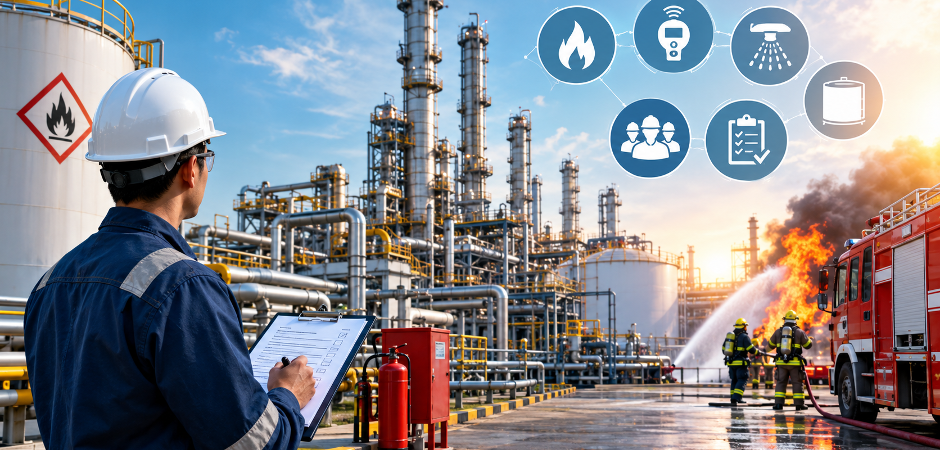
Chemical and petrochemical industries play a vital role in manufacturing, energy production, and the global supply chain. However, these facilities also face significant fire hazards due to the presence of flammable liquids, combustible gases, reactive chemicals, and high-temperature industrial processes. A single incident can result in severe injuries, extensive property damage, environmental contamination, and prolonged operational disruptions.
Managing fire risks in these environments requires a comprehensive approach that combines hazard identification, preventive maintenance, advanced fire protection systems, and employee preparedness. By implementing effective fire safety strategies, industrial facilities can reduce the likelihood of incidents and minimize their potential consequences.
Understanding Fire Hazards in Chemical and Petrochemical Facilities
Chemical and petrochemical facilities handle a wide range of substances that can ignite, explode, or react dangerously under certain conditions. Flammable liquids and gases, such as those used in refining and chemical processing, may release vapors that ignite when exposed to sparks, hot surfaces, or open flames.
Leaks from pipelines, storage tanks, valves, and processing equipment are particularly concerning because hazardous substances can accumulate unnoticed. In confined or poorly ventilated areas, these releases may create explosive atmospheres. Meanwhile, chemical reactions that generate excessive heat, equipment overheating, and static electricity can introduce additional ignition risks.
Certain chemicals also react violently when exposed to incompatible substances, moisture, or oxygen. These hazards make proper chemical segregation, storage, handling, and process control essential components of industrial fire prevention.
Implementing Effective Fire Prevention Measures
Preventing fires begins with identifying potential hazards before they develop into emergencies. Facilities should conduct regular fire risk assessments that evaluate chemical inventories, process conditions, equipment integrity, storage arrangements, and potential ignition sources.
Strict controls over ignition sources are particularly important in hazardous areas. Electrical equipment must be suitable for the classified environment, while hot work activities such as welding, cutting, and grinding should require formal permits, appropriate isolation procedures, and continuous monitoring when necessary.
Good housekeeping also plays an important role. Chemical spills, oily residues, combustible packaging, and accumulated waste can increase the likelihood and severity of fires. Establishing clear procedures for spill containment, waste disposal, and routine inspections helps maintain safer working conditions.
In addition, preventive maintenance should cover critical equipment, including pumps, compressors, pressure vessels, pipelines, electrical installations, and safety instrumentation. Detecting corrosion, damaged seals, abnormal vibration, and excessive temperatures early can help prevent hazardous releases and equipment-related ignition events.
Strengthening Fire Detection and Suppression Systems
Early detection is essential in chemical and petrochemical facilities, where fires can escalate rapidly. Conventional smoke detectors may not be sufficient for every industrial environment, particularly in outdoor processing areas or locations with high airflow. Depending on the hazards present, facilities may require a combination of flame detectors, combustible gas detectors, heat detectors, and specialized smoke detection technologies.
These systems should be integrated with alarms, emergency shutdown systems, and other safety controls where appropriate. For example, detecting a dangerous gas concentration may trigger an alarm, initiate ventilation controls, or activate an automatic shutdown sequence designed to reduce the risk of ignition.
Fire suppression systems must also be selected according to the materials and processes involved. Water-based sprinkler and deluge systems can provide cooling and exposure protection in suitable applications, while foam systems may be appropriate for certain flammable liquid fires. Dry chemical and gaseous suppression systems may serve specific hazards involving specialized equipment or enclosed spaces.
No single suppression method is suitable for every chemical fire. Water can be ineffective or dangerous when used on certain reactive chemicals or burning materials that react with water. Facilities must therefore evaluate chemical compatibility, fire scenarios, drainage, and environmental consequences before selecting protection systems.
Regular inspection, testing, and maintenance are equally important to ensure that detection and suppression equipment remains operational when an emergency occurs.
Managing Chemical Storage and Process Safety
Proper chemical storage is a fundamental part of fire risk management. Flammable liquids should be kept in designated areas with appropriate ventilation, containment, and protection against ignition sources. Hazardous chemicals must be segregated according to their compatibility, with clear labeling and accessible safety data sheets to support safe handling.
Storage tanks and transfer systems require particular attention because overfilling, excessive pressure, corrosion, and equipment failure can cause hazardous releases. Facilities should use suitable level monitoring, pressure protection, leak detection, and emergency isolation systems to control these risks.
Process safety management is equally important. Operating parameters such as temperature, pressure, flow rate, and chemical concentration must remain within established safe limits. Management of change procedures should evaluate potential fire and explosion risks before introducing new chemicals, modifying equipment, or changing operating conditions.
Where appropriate, facilities can use structured hazard analysis methods, such as Hazard and Operability Studies (HAZOP), to identify deviations that could lead to dangerous events. Combining these assessments with reliable safety instrumentation and clear operating procedures helps strengthen overall process safety.
Preparing Employees for Fire Emergencies
Even well-designed fire protection systems depend on trained personnel and effective emergency procedures. Employees should understand the hazards associated with the chemicals they handle, recognize warning signs of equipment failure, and know how to report leaks, spills, and unsafe conditions.
Regular training should cover alarm recognition, evacuation routes, emergency shutdown procedures, chemical-specific response measures, and the correct use of portable fire extinguishers. Employees must also understand when not to attempt firefighting, particularly when dealing with rapidly spreading fires, toxic releases, or potential explosions.
Emergency response plans should establish clear responsibilities for facility personnel, incident commanders, emergency response teams, and external responders. Facilities should conduct realistic drills that account for scenarios such as flammable gas leaks, tank fires, chemical spills, and simultaneous emergencies.
Coordination with local fire departments and other emergency services can further improve preparedness. Sharing information about hazardous substances, facility layouts, isolation points, and emergency access routes helps responders make informed decisions during an incident.
Ensuring Regulatory Compliance and Continuous Improvement
Fire safety in chemical and petrochemical industries requires ongoing attention to applicable regulations, recognized engineering standards, and industry best practices. Facilities should review their fire protection measures against relevant requirements, including those governing hazardous materials, electrical installations, emergency planning, and industrial process safety.
Depending on the facility and jurisdiction, standards and guidance from organizations such as the National Fire Protection Association (NFPA), the Occupational Safety and Health Administration (OSHA), and the International Electrotechnical Commission (IEC) may provide useful frameworks for managing specific hazards. Local Indonesian requirements must also be considered where applicable.
Compliance should not be treated as a one-time exercise. Routine audits, incident investigations, equipment performance reviews, and corrective action tracking help identify weaknesses before they contribute to serious accidents. Near misses and minor leaks should be investigated to uncover underlying causes rather than treated as isolated events.
Management commitment is essential to sustaining these improvements. Adequate investment in equipment, maintenance, training, and safety culture helps ensure that fire prevention remains an operational priority rather than simply a regulatory obligation.
Conclusion
Managing fire risks in chemical and petrochemical industries requires a coordinated strategy that addresses hazardous materials, ignition sources, process conditions, fire protection systems, and human factors. From conducting comprehensive risk assessments to strengthening chemical storage practices and improving emergency preparedness, every preventive measure contributes to a safer industrial environment.
By combining reliable fire detection and suppression technologies with disciplined process safety management and continuous improvement, facilities can reduce the likelihood of catastrophic incidents, protect employees and surrounding communities, and maintain operational resilience. A proactive approach to fire safety is not only essential for regulatory compliance but also a fundamental investment in the long-term sustainability of chemical and petrochemical operations.
Related posts:
 How Fire Suppression Systems Protect Against Chemical Hazards
 How Chemical Suppression Systems Differ from Water-Based Systems
 The Role of Fire Sprinkler Systems in Reducing Fire Risks
 Battery Storage and Fire Safety: Protecting Against New Risks
 Fire Risks from Modern Battery Storage and E-Vehicles