False alarms remain one of the major challenges in modern fire detection and alarm systems. Unnecessary alarm activations can disrupt daily operations, cause unnecessary evacuations, increase emergency response costs, and gradually reduce people’s confidence in fire safety systems. In facilities with complex environments, such as industrial plants, commercial buildings, hospitals, and high-rise developments, managing false alarms is essential to maintaining effective fire protection.
Artificial Intelligence (AI) is emerging as a valuable technology for improving alarm accuracy. By analyzing data, recognizing patterns, and distinguishing potential fire conditions from non-emergency events, AI can help reduce unnecessary alarm activations while supporting faster and more informed responses to genuine fire threats.
Understanding the Causes of False Alarms
False alarms can occur for several reasons, including environmental conditions, equipment malfunctions, improper installation, and human activities. Common triggers include dust, steam, cooking smoke, temperature fluctuations, insects, and airborne particles.
Traditional fire detection systems generally rely on predefined sensitivity thresholds. When environmental conditions exceed these thresholds, detectors may activate even when no actual fire is present. Although these systems provide essential protection, they may struggle to distinguish between genuine fire indicators and non-threatening environmental changes.
This is where AI-based technologies can provide additional intelligence and improve detection performance.
How AI Improves False Alarm Management
- Intelligent Pattern Recognition
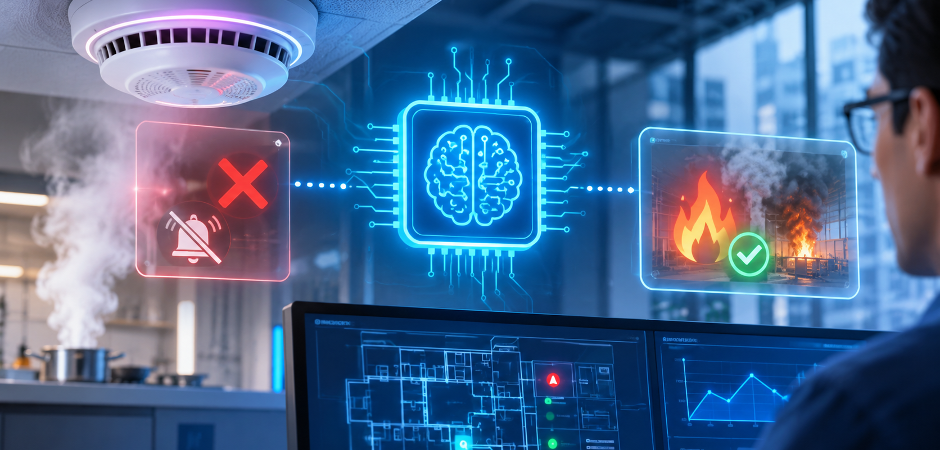
AI can analyze patterns from multiple data sources to identify conditions associated with actual fire incidents. Instead of relying solely on individual sensor readings, machine learning algorithms can evaluate combinations of smoke levels, temperature changes, humidity, and other environmental indicators.
By comparing real-time data with previously learned patterns, AI can better distinguish between normal environmental variations and potential fire events. This helps reduce unnecessary alarm activations without compromising the importance of early fire detection.
- Multi-Sensor Data Analysis
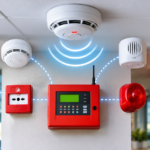
Modern fire detection systems can incorporate multiple sensors to monitor different indicators simultaneously. AI enhances this capability by analyzing information from smoke detectors, heat sensors, gas detectors, and other connected devices.
For example, smoke detected in a kitchen may not necessarily indicate a fire. However, when smoke readings are accompanied by an unusual temperature increase and other fire-related indicators, the system can identify a potentially more serious situation.
Combining multiple data points provides a more comprehensive understanding of the surrounding environment and helps improve alarm reliability.
- Real-Time Environmental Monitoring
Environmental conditions can change throughout the day, particularly in industrial facilities and buildings with varying occupancy levels and operational activities.
AI-powered systems can continuously monitor these changes and recognize recurring environmental patterns. This allows the system to identify situations that may commonly trigger false alarms, such as steam released during industrial processes or dust generated during construction activities.
With continuous monitoring, AI can help improve detection accuracy by interpreting sensor readings within their environmental context.
- Predictive Maintenance and Fault Detection
False alarms are not always caused by environmental conditions. Aging equipment, dirty detectors, damaged wiring, and communication failures can also affect system performance.
AI can analyze historical device performance and identify unusual patterns that may indicate developing faults. By recognizing changes in detector sensitivity, repeated abnormal readings, or communication irregularities, the system can help maintenance teams identify equipment that requires inspection or servicing.
This predictive approach supports more effective maintenance planning, reduces unexpected system failures, and helps maintain the reliability of fire protection equipment.
- Faster Alarm Verification and Response
AI can also support alarm verification by integrating information from surveillance cameras, building management systems, and connected fire detection devices.
For example, AI-powered video analytics may help identify visible smoke, flames, or other unusual conditions in monitored areas. When combined with fire detector information, these additional insights can help operators assess alarm events more quickly.
This enables facility management and emergency response teams to make better-informed decisions while reducing unnecessary disruptions caused by false alarms.
Benefits of AI in Fire Alarm Management
Integrating AI into fire detection and alarm management offers several operational advantages:
- Reduced False Alarm Rates: Improved analysis of environmental and sensor data helps minimize unnecessary alarm activations.
- Improved Detection Accuracy: Multiple data sources provide a more reliable assessment of potential fire conditions.
- Efficient Maintenance: Predictive analytics help identify equipment problems before they lead to system failures.
- Faster Decision-Making: Real-time information supports quicker alarm verification and response.
- Operational Continuity: Fewer unnecessary evacuations and interruptions help maintain normal building operations.
- Better System Performance: Continuous data analysis provides insights that can support ongoing improvements to fire detection systems.
Challenges and Considerations
Despite its potential, implementing AI in fire alarm management requires careful planning. AI systems depend on reliable data, appropriate training, and proper integration with existing fire protection infrastructure.
Poor-quality data or incorrectly configured algorithms may lead to inaccurate assessments. Additionally, cybersecurity, system compatibility, maintenance requirements, and regulatory compliance must be considered during implementation.
Most importantly, AI should complement established fire detection and alarm systems rather than replace essential life-safety functions. Any AI-assisted alarm verification or decision-support process must be designed to ensure that genuine fire warnings are not delayed, suppressed, or ignored.
The Future of AI in Fire Detection
As smart building technologies continue to develop, AI is expected to play an increasingly important role in fire safety management. Integration with the Internet of Things (IoT), cloud-based monitoring, building automation, and advanced analytics will provide more comprehensive insights into building conditions.
These technologies can help transform traditional fire alarm systems into more intelligent monitoring solutions capable of identifying abnormal conditions, anticipating equipment issues, and supporting more effective emergency management.
Conclusion
AI offers significant opportunities to improve false alarm management by enhancing pattern recognition, analyzing multiple sensor inputs, monitoring environmental conditions, and supporting predictive maintenance. These capabilities can help reduce unnecessary disruptions while improving the reliability and efficiency of fire detection systems.
However, effective implementation requires proper system integration, reliable data, and compliance with applicable fire safety standards. By combining AI-driven insights with proven fire protection technologies and professional maintenance, building owners and facility managers can strengthen fire safety management and create safer, more reliable environments.